
Diabetic Eye Disease
 |
| Normal Retina |
| Diabetic Macular Edema |
 |
| Severe Nonproliferative Diabetic Retinopathy |
 |
| Vitreous Haemorrhage |
Diabetes is a chronic(lifelong) disease in which carbohydrate(Glucose ) metabolism(breakdown ) is abnormal due to insufficient level of Insulin hormone in the body. High glucose blood level is the hallmark of this disease. This causes many secondary effects on all organs and systems in the body.
Diabetic eye disease is one of the vital and potentially dangerous complication 0f diabetes. If it remains undetected and therefore untreated it can cause permanent blindness.
What is Diabetic Eye?
Diabetic eye disease refers to a group of eye problems that people with diabetes may face as a complication of this disease. All can cause severe vision loss or even blindness.
Diabetic eye disease may include:
- Diabetic retinopathy – damage to the blood vessels in the retina.
- Cataract – clouding of the eye lens.
- Glaucoma – increase in fluid pressure inside the eye that leads to optic nerve damage and loss of vision
Most common Diabetic Eye disease
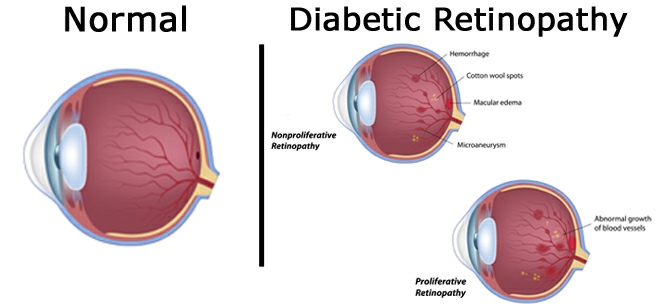
Diabetic retinopathy. This disease is a leading cause of blindness all over the world. It is caused by changes in the blood vessels of the retina. In some people with diabetic retinopathy, retinal blood vessels may swell and leak fluid. In other people, abnormal new blood vessels grow on the surface of the retina. These changes may result in vision loss or blindness.
Symptoms
Often there are none in the early stages of the disease. Vision may not change until the disease becomes severe. Nor is there any pain. Blurred vision may occur when the macula – the part of the retina that provides sharp, central vision – swells from the leaking fluid. This condition is called macular edema. If new vessels have grown on the surface of the retina, they can bleed into the eye, blocking vision. But, even in more advanced cases, the disease may progress a long way without symptoms. That is why regular eye examinations for people with diabetes are so important.
Most likely to be affected
Anyone with diabetes. The longer someone has diabetes, the more likely he/she will get diabetic retinopathy. Between 40-45 percent of those with diagnosed diabetes have some degree of diabetic retinopathy.
Detection
If you have diabetes, you should have your eyes examined at least once a year. Your eyes should be dilated during the exam. That means eyedrops are used to enlarge your pupils. This allows the eye care professional to see more of the inside of your eyes to check for signs of the disease. In some patients special procedures are done to detect changes which could lead to blindness. These are Fundus Photography, Fundus Fluoroscein Angiography(FFA) and Optical Coherence Tomography(OCT). The figure is that of a normal Fundus Angiogram.
Treatment
 Your eye care professional may suggest laser surgery in which a strong light beam is aimed onto the retina. Laser surgery and appropriate follow-up care can reduce the risk of blindness by 90 percent. However, laser surgery often cannot restore vision that has already been lost. That is why finding diabetic retinopathy early is the best way to prevent vision loss.
In patients with very advanced diabetic eye disease, surgery is necessary to remove the accumulated blood and clear the scar tissue from inside the eye(Vitrectomy).
Prevention
Diabetic Retinopathy cannot be totally prevented, but your risk can be greatly reduced. The Diabetes Control and Complications Trial (DCCT) showed that better control of blood sugar level slows the onset and progression of retinopathy and lessens the need for laser surgery for severe retinopathy.
 The study found that the group that tried to keep their blood sugar levels as close to normal as possible also had much less kidney and nerve disease. This level of blood sugar control may not be best for everyone, including some elderly patients, children under 13, or people with heart disease. So ask your doctor if this program is right for you.
Other Diabetic Eye Diseases
If you have diabetes, you are also at risk for other diabetic eye diseases. Cataracts develop at an earlier age in people with diabetes. Cataracts can usually be treated by surgery.
Glaucoma may also become a problem. A person with diabetes is nearly twice as likely to get glaucoma as other adults. And, as with diabetic retinopathy, the longer you have had diabetes, the greater your risk of getting glaucoma. Glaucoma may be treated with medications, laser, or other forms of surgery.
Current Research
Much research is being done to learn more about diabetic eye disease. This research should provide better ways to detect and treat diabetic eye disease and prevent blindness in more people with diabetes.
Protection of vision
Finding and treating the disease early, before it causes vision loss or blindness, is the best way to control diabetic eye disease. So, if you have diabetes, make sure you get a dilated eye examination at least once a year.
In a nutshell
Diabetes is a disease that can cause very serious health problems. If you have diabetes:
- Know your ABCs-A1C (blood glucose), blood pressure (BP), and cholesterol numbers.
- Take your medicines as prescribed by your doctor.
- Monitor your blood sugar daily.
- Reach and stay at a healthy weight.
- Get regular physical activity.
- Quit smoking.